

1. Blackland clay moves — and your flashing pays for it
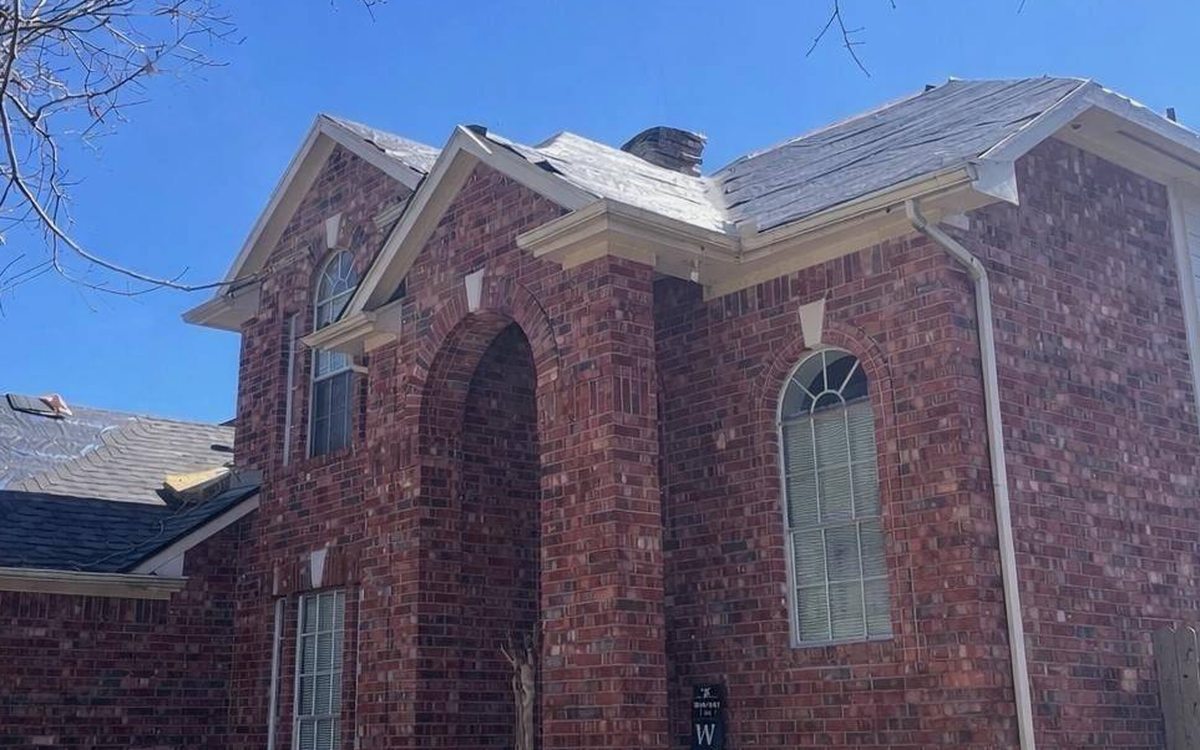
The Brazos Valley sits on expansive clay that swells with spring rain and shrinks hard in August. As foundations breathe, rooflines rack subtly with them — and the first casualties are rigid details: chimney flashing pulls from mortar joints, valley metal creases, and hairline gaps open at wall-to-roof transitions. If your interior doors started sticking the same season a ceiling stain appeared, the two are probably related. Fix: flexible sealant systems at transitions, properly stepped (not face-caulked) flashing, and an inspection after any notably dry summer.
2. The rental-cycle roof
Aggieland's rental stock turns over every August, and roofs on student properties routinely go five-plus years without anyone looking at them. Small problems — a cracked boot, one lifted shingle — run unreported until a tenant photographs a ceiling stain. For landlords the math is simple: an annual free inspection between leases costs nothing and prevents interior repairs that eat a month's rent. We schedule around turn week for exactly this reason.
3. Live oaks giveth shade, and taketh granules
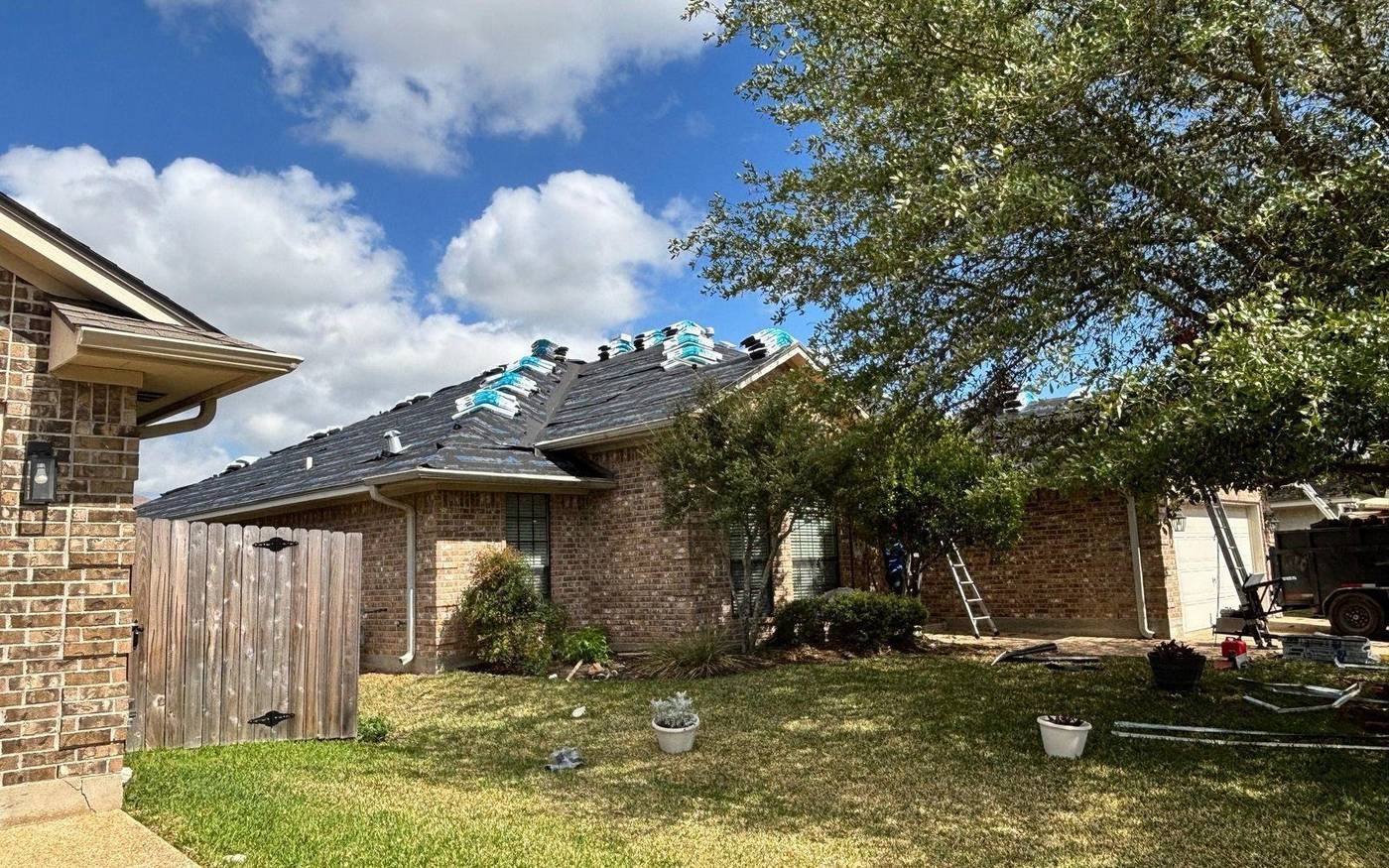
The mature oaks on Southwood, College Hills, and older Bryan streets scrub granules off shingles wherever limbs overhang, and their leaf litter mats in valleys, holding moisture against the roof through humid weeks. Shaded, damp shingle grows algae and ages fast. Fix: trim to a 6-foot clearance, clear valleys twice a year, and choose algae-resistant shingles at replacement.
4. Hail you never saw
Brazos Valley hail cells are often narrow — one neighborhood gets pounded while campus stays dry. Bruised mat under intact granules is invisible from the ground and fails two to three years later as rapid granule loss. After any reported hail within a few miles, a free inspection with photos is the only way to know, and early documentation keeps your options open.
5. The attic that cooks the roof
A 145-degree August attic ages shingles from below and drives cooling bills up. Many 1980s-2000s College Station homes have blocked soffit vents (insulation pushed into the eaves) and no ridge exhaust. Balanced intake and exhaust is the cheapest lifespan upgrade a roof here can get — we check it on every inspection.
Frequently Asked Questions
What is the most common roof problem in College Station?
Flashing and transition failures accelerated by clay-soil movement, followed by unseen hail bruising. Both show up on a professional inspection long before they show up on your ceiling.
How often should College Station rental properties get roof inspections?
Annually, ideally between summer leases. Tenants rarely report small exterior problems, so inspection is the landlord's early-warning system.
Do live oaks damage roofs?
Overhanging limbs abrade granules and drop debris that holds moisture in valleys. Trimmed clearance plus seasonal valley clearing largely neutralizes the risk.
How do I know if my College Station roof took hail?
You usually can't from the ground — bruising hides under intact granules. If hail was reported nearby, book a free inspection with photo documentation.
Need a straight answer about your roof?
Free inspections, honest inspections, and a local team that answers the phone.
Get a Free Inspection


