

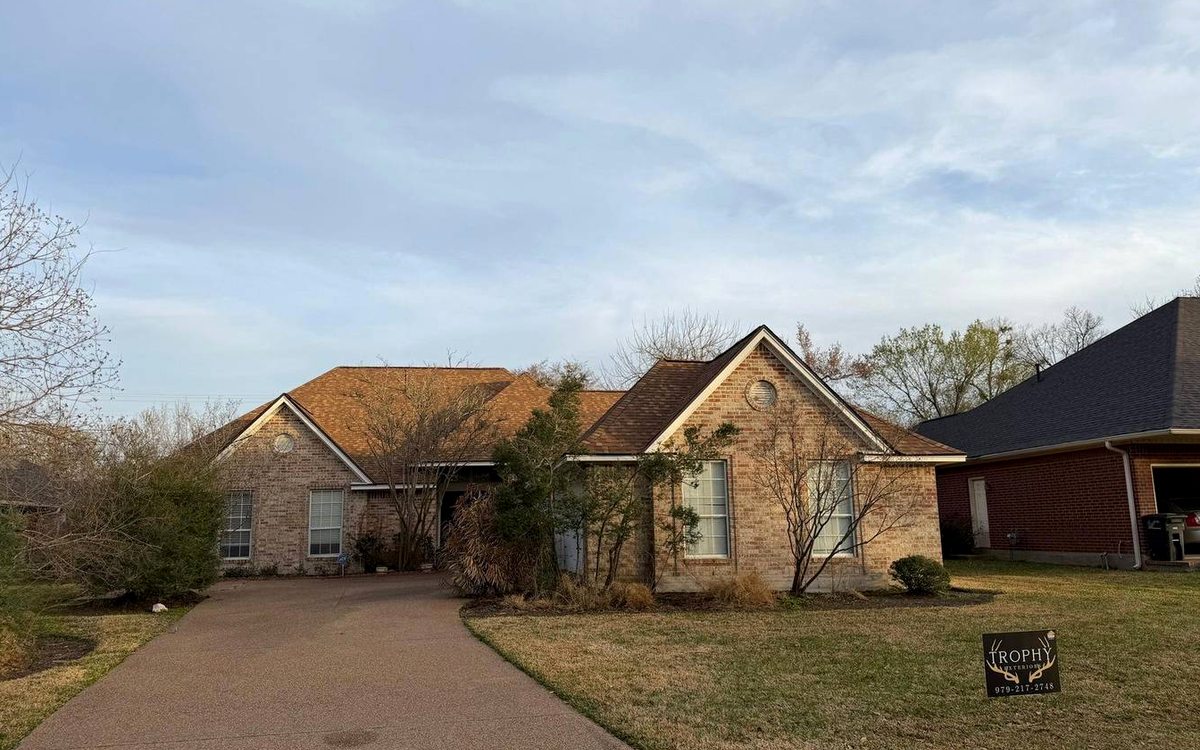
For homeowners across the Brazos Valley, a roof isn't a generic product — it has to stand up to what College Station actually throws at it. Near Texas A&M University, Kyle Field, Lake Bryan, and the rolling Brazos Valley countryside, Trophy Exteriors builds and inspects every roof for local conditions, not a one-size-fits-all checklist.
What College Station weather really does to a roof
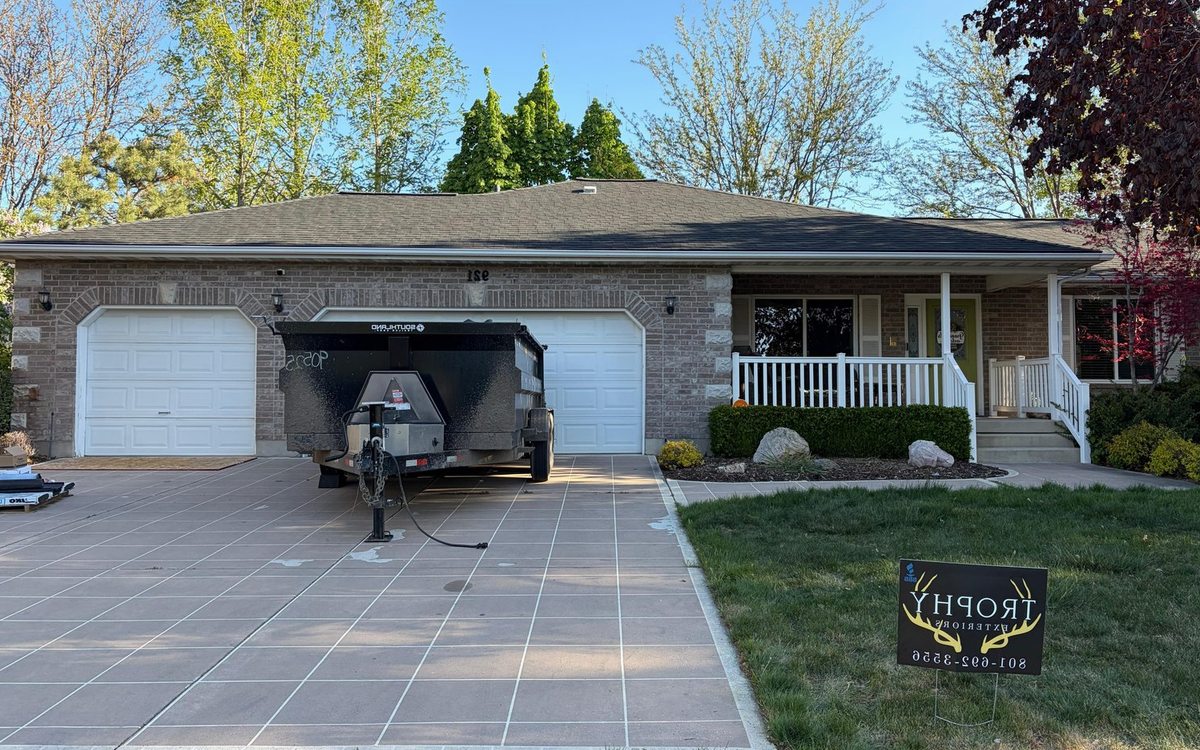
Roofs here contend with hot, humid summers and mild winters that bake asphalt shingles and invite algae streaking. Brazos Valley homeowners know spring hail well, and Winter Storm Uri in February 2021 reminded the whole region that even Texas roofs face hard freezes and burst-pipe cold. That history is exactly why the biggest local threat — spring and early-summer hail and the occasional remnants of Gulf tropical systems — shapes how we detail flashing, choose materials, and protect a College Station roof from the next event.
Why roofs leak
Most leaks don't start in the open field of the roof; they start at transitions, penetrations, and worn flashing. Tracing a leak to its true source, rather than just patching the stain below it, is what actually stops the water.
Granule loss and what it means
The granules on asphalt shingles are their sunscreen, and when they wash into the gutters the shingle underneath ages fast. Heavy granule loss on a roof that's more than 15 years old usually means replacement is on the horizon.
When it's time to replace your roof
Most asphalt roofs last 20-25 years, but widespread curling, bald spots, granules filling the gutters, and daylight in the attic all signal the end is near. A roof past its lifespan is a leak waiting to happen, and replacing it on your schedule beats replacing it after the ceiling falls.
How long different roofs last
Asphalt shingles typically last 20-25 years, metal 40-70, tile and slate 50-plus, and wood shake around 30 with maintenance. Actual lifespan depends heavily on ventilation, installation quality, and how much sun and storm the roof endures.
What a real inspection covers
A thorough inspection examines the shingles, flashing, penetrations, and gutters from the roof, then checks the attic for stains, daylight, and ventilation. You should come away with photos, a plain-English assessment, and a straight recommendation, not a high-pressure sales pitch.
Permits, code, and insurance in College Station
The City of College Station and Bryan generally require a permit for a full reroof, and current code often calls for proper attic ventilation and ice-and-water protection at valleys and penetrations. Because Brazos Valley hail claims are common, documenting damage the day a storm passes and filing before the Texas claim deadline is what gets a roof fully funded.
Serving College Station neighborhoods
Trophy Exteriors works throughout College Station, from Woodcreek, Greens Prairie, Nantucket, Pebble Creek to Castlegate, and across the communities near Texas A&M University, Kyle Field, Lake Bryan, and the rolling Brazos Valley countryside. Every neighborhood has its own mix of roof ages and styles, and a local team gets you an honest, area-specific answer.
Proudly serving Brazos County and the College Station community
Trophy Exteriors is part of the fabric of College Station in Brazos County. We roof homes for families near A&M Consolidated High School, College Station High School and Rudder High School, and you'll see our crews around town during Aggie football Saturdays at Kyle Field, the Brazos Valley Fair, and Christmas at the Station. Hiring a local roofer means hiring neighbors who know College Station — its neighborhoods, its weather, and the way people here expect to be treated.
A local College Station roofer, here for the long haul
Trophy Exteriors is family-owned and rooted in the community, and we treat College Station homes like a neighbor's — because they are. That's why our workmanship warranty means something: we'll still be here when you need us, not chasing the next storm three states away.
Frequently Asked Questions
What are the signs I need a new roof?
Curling or missing shingles, granules in the gutters, dark worn patches, a sagging roofline, and daylight or stains in the attic are the classic warning signs. Several of these together usually mean replacement.
How long should my roof last?
Asphalt shingles typically last 20-25 years, metal 40-70, and tile or slate 50-plus. Ventilation, installation quality, and local weather all move that number up or down.
When should I get my roof inspected?
At least once a year, and again after any major storm. Catching damage early keeps a small repair from becoming an interior leak, and creates a dated record of your roof's condition.
Ready for a free roof inspection?
Honest assessment, no pressure, from a local team that stands behind its work.
Get a Free Inspection


