

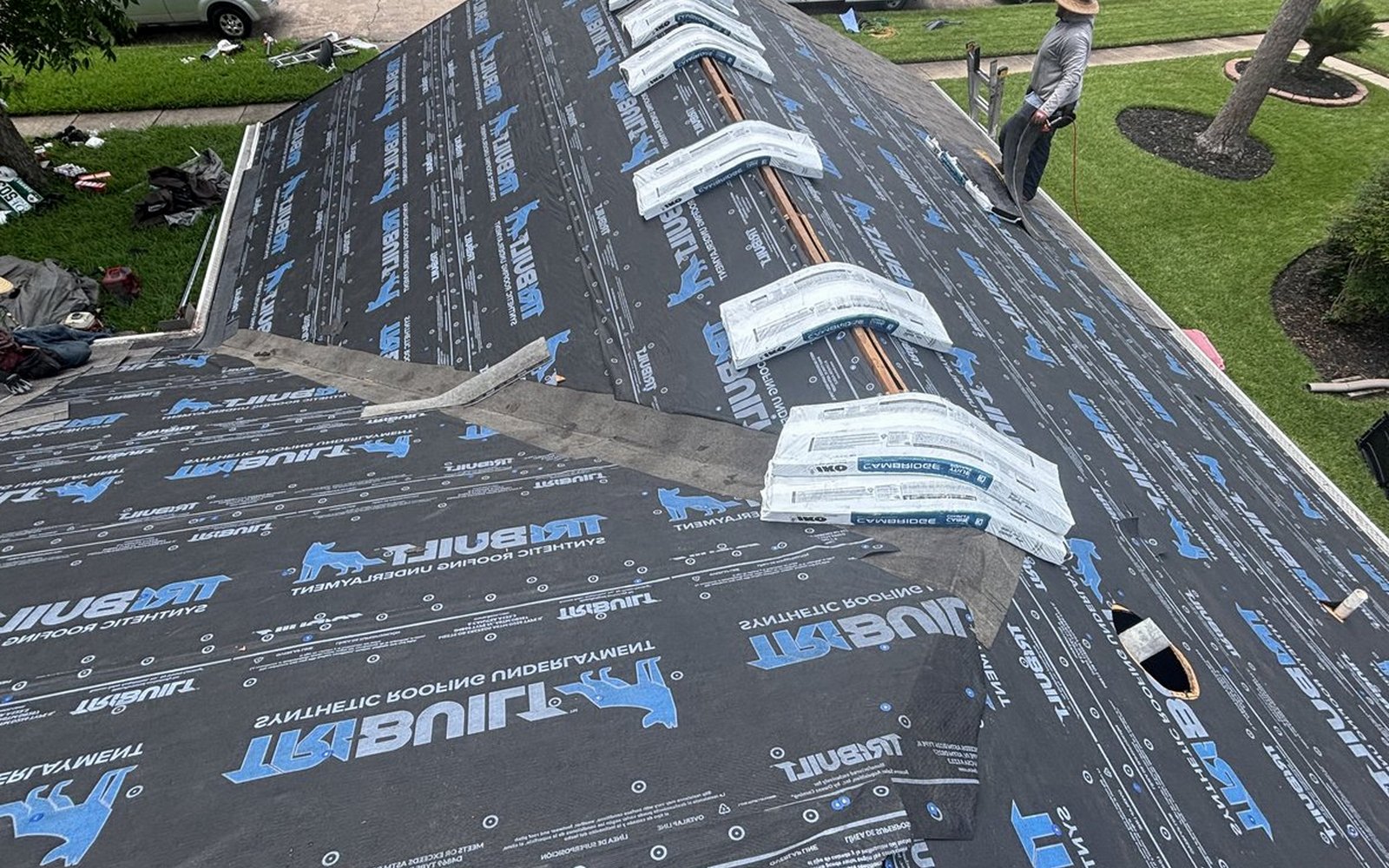
Every renovation added a leak point
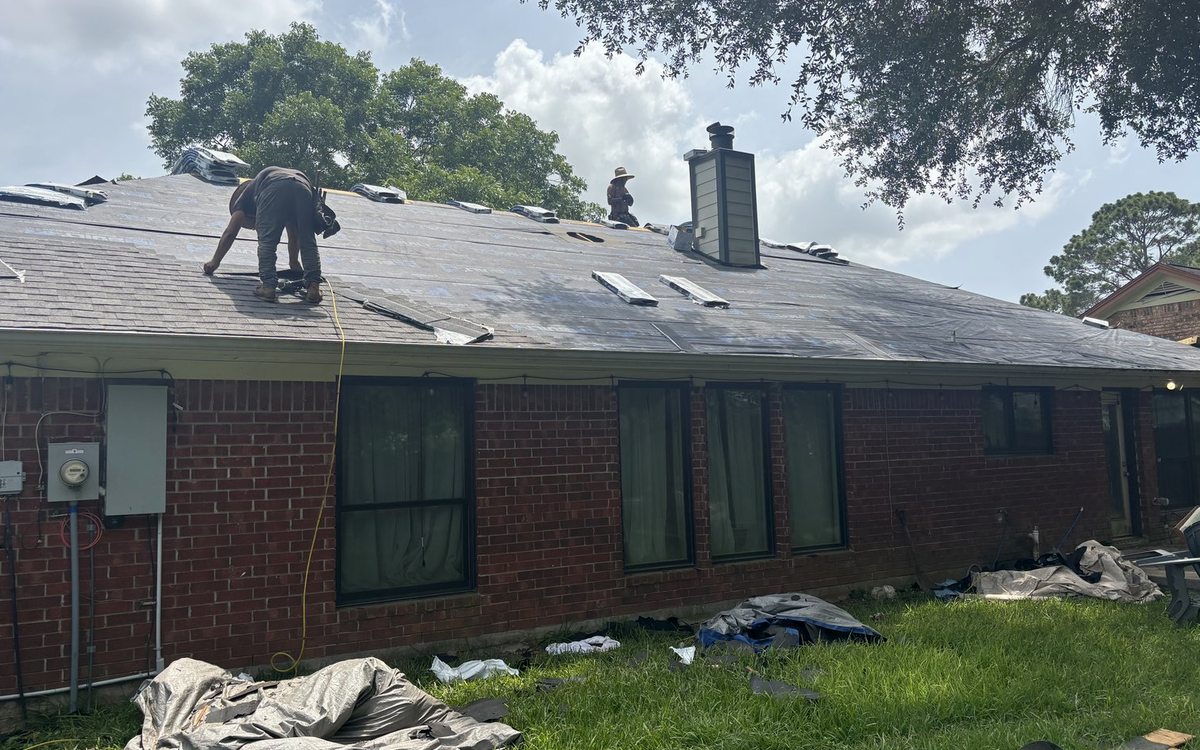
West University, Bellaire, and Southampton homes have been renovated in waves — a den in the 70s, a primary-suite addition in the 90s, a kitchen bump-out in the 2010s. Each one created a roof-to-roof or roof-to-wall transition, and transitions are where inner-loop roofs actually fail. The original 1940s field shingle is often outlived by three additions' worth of tie-ins.
Dead valleys: where water gives up
Where an addition's roof meets the original at the wrong angle, water stops moving — a dead valley. Shingles are designed for moving water; standing water needs membrane. If your ceiling stain sits near where two rooflines meet, this is the first suspect, and the fix is a properly membraned and crickted transition, not caulk.
The low-slope porch tie-in
Houston's beloved porch and patio covers are usually pitched below shingle minimums, then shingled anyway. They survive dry years and fail in tropical rain. The correct build is a membrane system (modified bitumen or TPO) with a proper metal transition where it meets the steep roof.
Flashing older than the mortgage
Counter-flashing set into 80-year-old mortar joints lets go grain by grain. Hurricane-driven rain finds it instantly. Re-cutting reglets and installing new counter-flashing is unglamorous work that permanently ends the leak caulk never will.
The inner-loop inspection
On pre-1960 homes we inspect transitions first, field second: every addition seam, every porch tie-in, every mortar joint with metal in it, photographed and scoped item by item — free, with a report you can act on now or file for later.
Frequently Asked Questions
Why does my West University home leak at the addition?
Addition seams create dead valleys and wall transitions that original construction never planned for. These need membrane and flashing solutions, not more shingles or caulk.
Can you shingle a low-slope porch roof in Houston?
Below a 2:12 pitch, shingles will eventually fail in tropical rain. Low-slope sections need membrane systems with correct transitions to the main roof.
How long does flashing last on older Houston homes?
Metal outlasts mortar: counter-flashing joints in 60-to-100-year-old masonry commonly fail decades before the metal itself. Re-cutting and resetting is the permanent fix.
Do you inspect additions differently?
Yes — on renovated inner-loop homes we map every transition first, because that's where the water gets in. Field shingles are usually the least of it.
Need a straight answer about your roof?
Free inspections, honest inspections, and a local team that answers the phone.
Get a Free Inspection


