

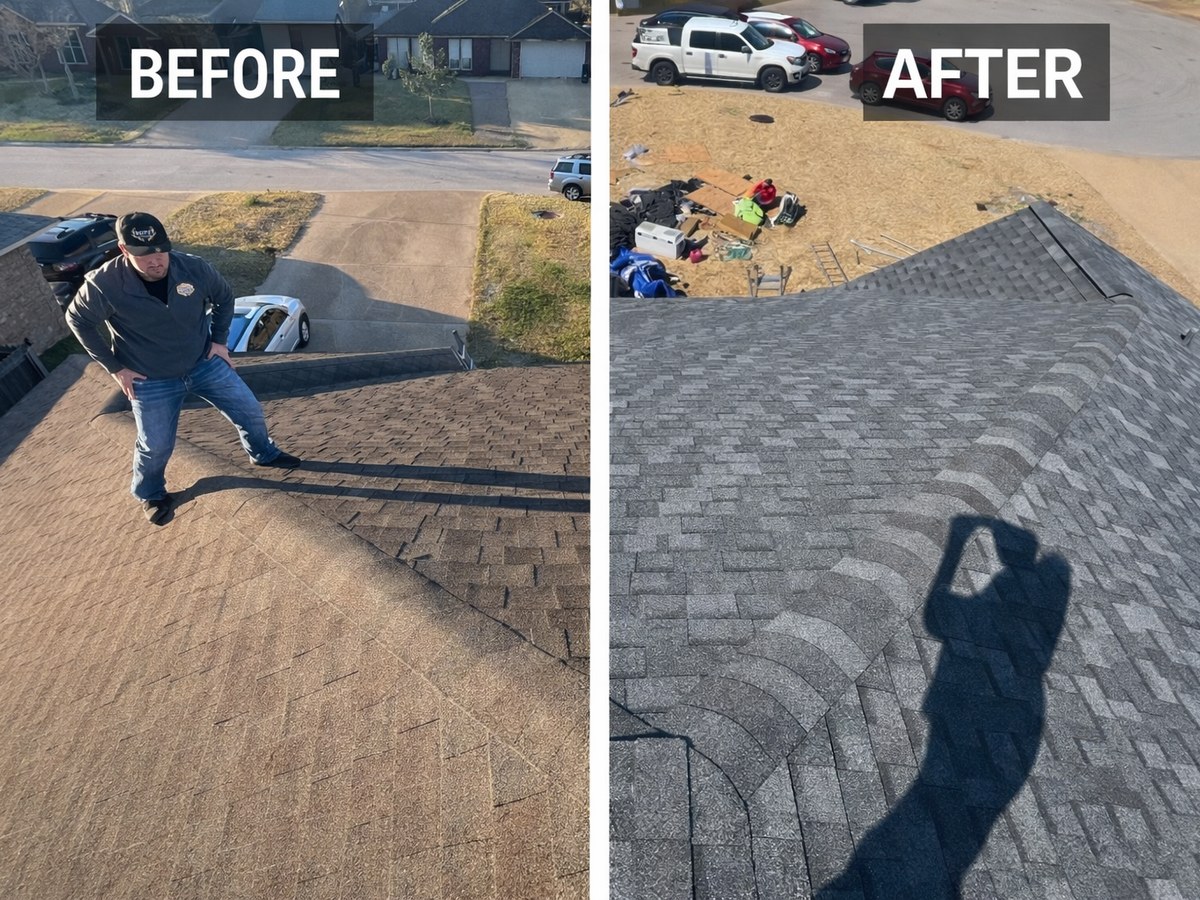
If you've noticed dark, streaky discoloration running down from the ridge of your roof, your first thought was probably dirt, mold, or soot from a nearby chimney. It's actually none of those. Those streaks have a name, a cause, and — good news — a fix that doesn't require replacing the roof.
What's actually causing the streaks
The culprit is an airborne, blue-green bacteria called Gloeocapsa magma, though almost everyone in the roofing world just calls it "roof algae." It lands on your shingles as spores, and once established, it feeds on the limestone filler used to manufacture asphalt shingles. As colonies grow and mature, they develop a dark, UV-protective outer coating, which is what gives the streaks their black or dark-brown color. The streaking pattern — running downward from the ridge — happens because rain washes spores down the roof slope, seeding new growth as it goes.
It's easy to confuse with soot or tree debris, but there's a simple tell: algae streaks are almost always heaviest on the north-facing slope of a roof, or any section that stays shaded and holds moisture longest. Soot and dirt staining tends to be more uniform and isn't tied to sun exposure the same way.
Why some roofs get it and others don't
Roof algae thrives on moisture, shade, and warmth, which is exactly why it shows up more in humid climates. Homes in Texas, Missouri, and other humid markets tend to see it more than roofs in drier climates like Utah or Montana, though no climate is completely immune. Roofs surrounded by mature trees, roofs with poor attic ventilation that trap heat and moisture, and older shingle roofs without algae-resistant granules are all more likely to develop noticeable streaking. It's also worth knowing that algae spreads: spores travel by wind and by birds landing on affected roofs, which is part of why entire neighborhoods with similar-age roofs often show the same streaking pattern at the same time.
Does it actually damage your roof?
Mostly, algae staining is cosmetic — it won't cause a leak by itself, and it doesn't eat through the shingle the way rot or hail impact does. That said, it isn't entirely harmless either. Algae holds moisture against the shingle surface longer than a clean roof would, and dark streaks absorb more solar heat, which can accelerate the natural aging of asphalt shingles over time, especially in already-hot climates. Left untreated for years, heavy algae growth can also affect resale curb appeal. It's a problem worth addressing, but not one that calls for panic or a full replacement on its own.
How to remove it the right way
The instinct many homeowners have is to rent a pressure washer and blast the streaks away. Don't. High-pressure washing strips the protective granules off asphalt shingles, shortens their lifespan, and can void the manufacturer's warranty outright. The correct method is a "soft wash" — a low-pressure application of a cleaning solution (typically a diluted bleach mixture or a dedicated roof-cleaning product) that's allowed to sit and break down the algae, then gently rinsed away at low pressure. Because ladders, steep slopes, and chemical handling are involved, many homeowners choose to hire a professional for this rather than attempt it themselves.
Stopping it from coming back
Cleaning removes the existing growth, but without a follow-up step, algae typically returns within a few years. The most effective long-term fix is installing zinc or copper strips just under the ridge cap. Every time it rains, trace metal ions wash down the roof slope and create an environment that's inhospitable to algae regrowth — a low-maintenance fix that keeps working for years. If you're due for a new roof anyway, many manufacturers now offer algae-resistant shingles with copper-infused granules built directly into the product, which is worth asking about when comparing materials. Keeping trees trimmed back to improve sun exposure and airflow helps too, since algae struggles to establish on a roof that dries out quickly after rain.
Frequently Asked Questions
What causes black streaks on a roof?
Black streaks on asphalt shingles are almost always a bacteria called Gloeocapsa magma, often just called roof algae. It feeds on the limestone filler in shingles and spreads across the roof, showing up as dark streaks that run down from the ridge — not dirt, soot, or mold.
Does algae actually damage the roof, or is it just cosmetic?
Mostly cosmetic, but not entirely harmless. Algae holds moisture against the shingle surface and, over time, dark streaks absorb more heat from the sun, which can shorten shingle life slightly in already-hot climates. It doesn't cause leaks by itself, but heavy, long-term growth is worth addressing rather than ignoring.
Can I remove roof algae myself?
You can, but pressure washing is the wrong tool — it strips protective granules and can void your shingle warranty. A low-pressure soft wash with a bleach-and-water or dedicated roof-cleaning solution, applied and gently rinsed, is the safer approach. Many homeowners choose to hire a professional to avoid damaging the shingles.
How do I stop the streaks from coming back?
Zinc or copper strips installed under the ridge cap release trace metal ions with every rain, which keeps algae from re-establishing for years. Many algae-resistant shingles also come with copper-infused granules built in for the same reason. Combined with a clean roof and good sun exposure, regrowth slows dramatically.
Want an honest look at what's on your roof?
Free inspections, honest estimates, and a local team that answers the phone.
Get a Free Inspection


