

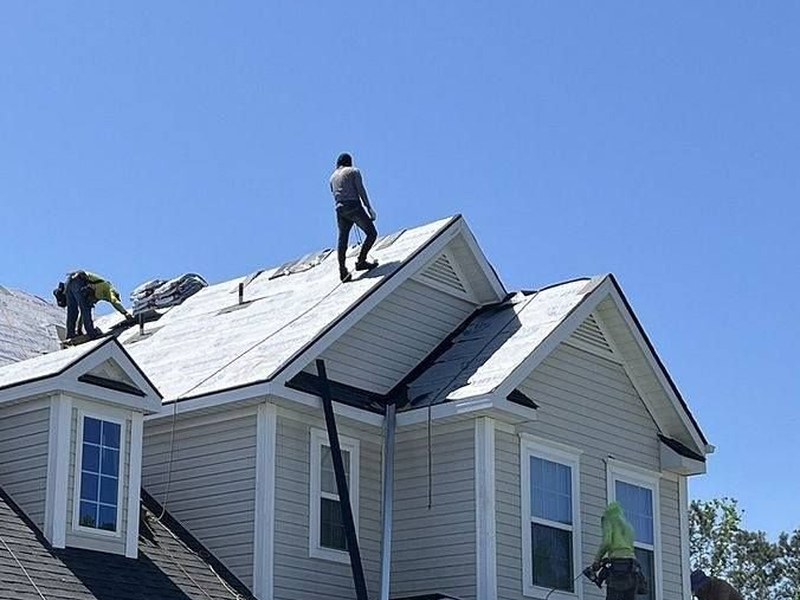
On the Texas Gulf Coast — Houston, Beaumont, and everywhere the big tropical systems reach — “flooding” and “roof damage” often arrive in the same storm. The rising water gets the headlines, but the wind-driven rain and prolonged saturation overhead can quietly compromise your roof. Here's what to check once the water recedes.
Understand the two kinds of water
Check ceilings and upper walls first
Roof-related intrusion shows up high: fresh stains on ceilings, water tracking down from around light fixtures or vents, and damp spots high on walls, appearing during or right after the rain. That pattern points to the roof, not the flood. Water rising from the floor is a flood issue. Getting this right shapes which claim you file.
Look for wind and debris damage
The same system that floods streets drives rain sideways and throws debris. From the ground, look for missing, lifted, or creased shingles, displaced flashing, and limbs or debris on the roof. Prolonged, heavy rain also finds any weak flashing or worn sealant that a normal shower wouldn't.
Check the attic
If it's safe, look in the attic with a flashlight for damp decking, wet insulation, or daylight. Catching roof intrusion early — before it soaks insulation and drywall — limits damage and mold, which spreads fast in Gulf Coast humidity.
Document and get inspected
Photograph everything with dates. If the damage is roof/wind related, your homeowner's policy may cover it; document it separately from any flood claim. Then get a professional inspection — and be wary of the out-of-town crews that swarm after big storms, or pressure you to sign on the spot. Trophy Exteriors offers free post-storm roof inspections across the Texas Gulf Coast and beyond, with honest findings and clear documentation.
Frequently Asked Questions
Can flooding damage a roof?
Flooding itself is usually a ground-level problem, but the same tropical systems bring wind-driven rain, prolonged saturation, and debris that damage roofs — and interior water from a compromised roof looks a lot like flood damage. It's worth checking the roof after any major rain event.
How do I tell roof leaks from flood water?
Roof-related water typically shows at the ceiling, around penetrations, or high on walls, and appears during or right after rain. Flood water rises from the floor. If you see fresh staining on ceilings or upper walls, suspect the roof and get it inspected.
Need a straight answer about your roof?
Free inspections, honest inspections, and a local team that answers the phone.
Get a Free Inspection


