

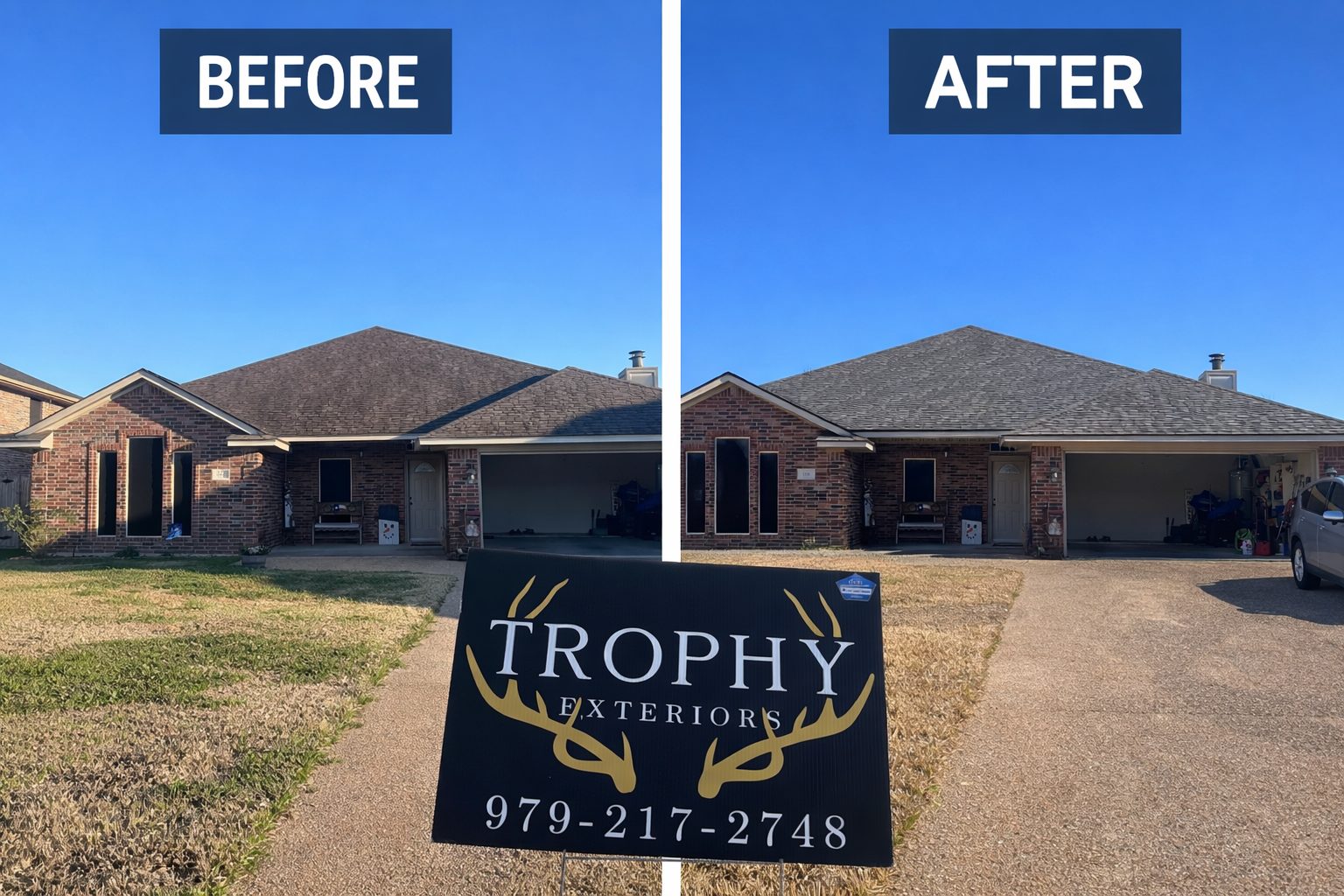
After a hail storm rolls through the Brazos Valley, the most dangerous roofs are the ones that look fine. Hail rarely punches visible holes in a roof — it bruises it. That bruising shortens your roof's life, voids manufacturer warranties if left undocumented, and can quietly turn into leaks a year later.
1. Granules in your gutters and downspouts
Hail knocks the protective granules off asphalt shingles. If your gutters look like they're full of coarse black sand after a storm, your shingles took a beating.
2. Dents in soft metals
Check your gutters, downspouts, window screens, and AC fins. If hail dented the soft metal around your home, it hit your shingles just as hard.
3. Bruised or shiny spots on shingles
Up close, hail hits look like dark bruises or shiny patches where granules are gone. You usually can't see them from the ground — which is why a professional inspection matters.
4. Cracked or lifted shingles
Wind that accompanies hail can lift and crease shingles, breaking their seal. A creased shingle will fail in the next storm even if it lies flat today.
5. Neighbors getting roofs replaced
Hail is a neighborhood event. If roofing crews are working your street, your roof saw the same storm.
If you suspect hail damage, don't wait — most Texas policies have a limited window to file.
Frequently Asked Questions
How can I tell if my roof has hail damage?
From the ground you usually can't. Check gutters, downspouts, and metal vents for dents, look for granules in the gutters, and inspect soft metals and screens. Bruising on shingles is often only visible on the roof itself.
How long do I have to file a hail claim in Texas?
Generally one year from the date of damage, but filing sooner is better — later storms make it harder to prove which storm caused what. Document the date and get an inspection promptly.
Need a straight answer about your roof?
Free inspections, honest inspections, and a local team that answers the phone.
Get a Free Inspection


